


Brazilian agriculture is undergoing a shift in its operation methods from the ground to the air. A survey by a market research institution shows that in the five years up to the 2024/25 planting season, the area of farmland in Brazil that has received at least one drone spraying operation has increased from approximately 3.4 million hectares to 10.4 million hectares, an increase of over 200%. What is more noteworthy is that in just one planting season from 2023/24 to 2024/25, the area of drone operations increased by 133%, marking the largest annual increase since the launch of this survey.
Growth Curve: From Experimental Fields to Large-scale Tools
The take-off of agricultural drones in Brazil is not uniform. Initially, they were regarded as a supplement to traditional spraying aircraft, suitable for small plots, corners of the land, or complex terrains. However, in the past five years, this technology has begun to enter mainstream production systems.
The data clearly depicts this turning point:
The 2019/20 planting season: approximately 3.4 million hectares
2024/25 planting season: approximately 10.4 million hectares
· Cumulative increase over five years: more than 200%
· Single-season increase from 2023/24 to 2024/25: 133%
These figures indicate that drone spraying is no longer merely a “technology demonstration project”, but is now becoming a regular option in Brazil’s crop management system.
Another report from the National Federation of Agricultural Aviation in Brazil provides a perspective from the equipment side: From 2021 to 2024, the number of drones used in agriculture in Brazil increased from 355 to 7,832, a growth of over 2,100%. Data from the Brazilian Ministry of Agriculture, Livestock, and Fisheries (MAPA) also shows that the number of agricultural drone operation units across the country increased from approximately 3,000 in 2021 to 35,000 in 2025.
The number of devices has soared in tandem with the area of operation, indicating that the dissemination of this technology has moved from “purchasing hardware” to “actually putting it into use”.
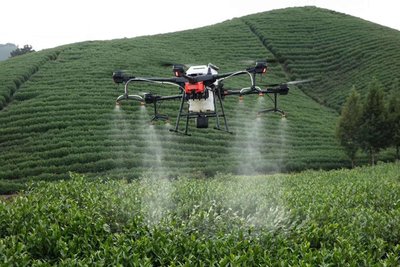
Application scenario: Pastures and sugar cane become the largest users
A common misconception is that drones in Brazil mainly serve large-scale grain crops such as soybeans and corn. However, the data for the 2024/25 period has shattered this stereotype.
In the 2024/25 planting season, the two areas with the largest areas covered by drone operations were:
Pasture management: Approximately 5.8 million hectares, an increase of 300% compared to the previous season
Sugar cane: Approximately 2.8 million hectares
The combined area covered by these drones accounts for over 80% of the total area for drone spraying across the country. Soybeans, one-season corn, two-season corn, coffee, and irrigated rice are also increasing, but their share in the total remains relatively small.
The logic behind this distribution is straightforward: Pasture and sugarcane cultivation areas often have characteristics such as large scale, complex terrain, and difficulty in accessing ground equipment. Drones, however, have significant advantages in terms of flexibility, rapid deployment, and accessibility. Especially in the new expansion areas of pastures and in the central-western part of Brazil near the Amazon, traditional spraying aircraft or ground machinery struggle to cover these areas, making drones a more economical choice.
Geographical distribution: Leading in the north and the central-west regions
The concentration of the areas sprayed by drones also reflects the aforementioned operational advantages. According to FarmTrak data, in the 2024/25 planting season, the five states with the largest area covered by drone operations were:
Pará State: 2.9 million hectares
São Paulo State: 1.5 million hectares
Rondônia State: 1.2 million hectares
Minas Gerais State: 836,000 hectares
Maranhão State: 719,000 hectares
The leading positions of Pará State and Rondônia State are highly consistent with the rapid expansion of ranch management in large estates, logistics difficulties, and areas with restricted accessibility. The inclusion of São Paulo State reflects the demand for precise pesticide application for economic crops such as sugarcane and citrus.
Industrial ecosystem: Chinese brands dominate, while Brazilian local brands are just beginning.
During this rapid expansion, the equipment supply sector has shown a clearly dominant Chinese pattern.
According to the 2025 report, the Brazilian agricultural drone market is almost monopolized by the large-scale models of China’s DJI and XAG series. This is in line with the global trend: data from DJI’s agricultural division shows that by the end of 2024, there were approximately 400,000 agricultural drones in operation worldwide, covering over 100 countries and over 300 types of crops.
Local Brazilian brands are also beginning to gain prominence, such as Xmobots, GTEEX, EFFORT TECH, and SkyDrones, etc. However, their scale is still relatively small compared to those of Chinese manufacturers. A technical investigation by the Brazilian Agricultural Research Corporation (Embrapa) pointed out that the airflow from the rotor of the unmanned aerial vehicle can improve the penetration of pesticide solution into the crop canopy, increase the deposition in the lower one-third area of the plant, with a concentration up to 1.9 times that of the ground method, and at the same time reduce the loss due to plant trampling. These technical characteristics provide a scientific basis for the popularization of unmanned aerial vehicles in large-scale agriculture in Brazil.
Beyond Technology: Regulations, Safety and Sustainability
As drones have evolved from peripheral tools to mainstream equipment, Brazilian regulatory authorities are also accelerating the improvement of regulations. Previously, there have been reports involving INMETRO and ANVISA’s regulatory requirements for agricultural drones, as well as the provisions of ICA 100-40 airspace rules regarding the operating radius of drones and the qualifications of operators. These regulations, while ensuring flight safety and integrating with regular air traffic, also affect the entry barriers and operational methods of the industry.
In terms of sustainability, the report indicates that 97% of agricultural airlines have implemented social and environmental responsibility actions, and 93% have adopted green innovations such as precision software, intelligent sensors, and drone-assisted technologies. The potential of drone spraying in reducing water consumption, minimizing pesticide drift, and achieving precise delivery makes it one of the key technologies in Brazil’s ESG narrative for agriculture.
Conclusion
The spraying area of agricultural drones in Brazil has doubled in five years. This is not just a numerical increase but also represents a shift in the operation paradigm: from “ground-based with air support” to “air-ground collaboration and on-demand selection”. Pastures and sugarcane have become the largest application fields, indicating that technological diffusion often occurs in areas where traditional equipment is ineffective; the strong presence of Chinese brands highlights the reshaping of the global agricultural equipment supply chain.
What is worth continuous observation in the future is: As the penetration rate of drones in Brazilian agriculture continues to increase, how will it change the application methods of pesticides, biological agents and special fertilizers? Can local brands find their own differentiation space in the large-scale market?
These questions do not have simple answers, but Brazil is using one of the world’s largest agricultural research laboratories to provide testing samples for the entire industry.
Post time: Aug-06-2026
