


High-temperature heat stress generally refers to a meteorological disaster where the temperature exceeds the upper limit of the temperature range suitable for crop growth, causing damage to plant growth and development and resulting in reduced yields or even complete failure. To mitigate the losses caused by high-temperature weather, it is recommended that farmers take corresponding measures for different crops and different growth stages.
Rice
The impact of high temperature on rice: Rice is a warm-loving crop and is extremely sensitive to temperature during the booting and heading stages (that is, within 10 days before and after heading). If the soil temperature exceeds 35°C during the booting stage, the reproductive organs of rice will develop incompletely, the pollen will not develop properly, and its vitality will decline. If the temperature exceeds 35°C during the heading and flowering stages, heat damage will occur, affecting pollen dispersion and the elongation of pollen tubes, resulting in inability to fertilize and the formation of empty grain shells, leading to a decrease in the yield rate, a lower thousand-grain weight, and even complete failure.
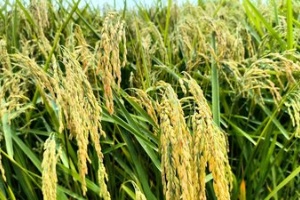
Preventive measures against heat damage:
1. Strengthen field water management. During the heading stage, the rice field must be irrigated with a 5-10 centimeter deep water layer, which can lower the soil temperature of the rice, enhance the vitality of the root system, and also increase the air humidity in the panicle layer, which is conducive to fertilization and seed setting of rice. For rice fields in the filling stage, shallow water frequent irrigation and night drainage can be adopted to prevent “high-temperature forcing ripening” and reduce the thousand-grain weight.
2. Pay attention to controlling pests in the middle and late stages of rice growth. High temperature will accelerate the reproduction of pests. The appropriate period for rice pest control is during the egg hatching peak and the 1-2 instar peak of nymphs. A 2000-fold solution of 10% imidacloprid water or a 1500-fold solution of 25% thiazopyr·isoprocarb wettable powder can be sprayed on the middle and lower parts of the rice, maintaining a shallow water layer for 3-5 days.
3. Take foliar fertilization. Foliar spraying with 3% superphosphate solution or 0.2% phosphoric acid dihydrogen potassium solution can enhance the resistance of rice plants to high temperature, effectively alleviate heat damage, and increase the yield rate and thousand-grain weight.
Vegetables
The impact of high temperature on vegetables: When the water absorbed by the root systems of vegetables from the soil cannot meet the evaporation needs of the plants, it will cause the leaves of the vegetable plants to curl, fall off, deteriorate in quality, reduce yield, and even wither and die. In high-temperature conditions, the number of flowers of vegetables is small, they develop poorly and their resistance to pests and diseases decreases, and pest and disease problems are severe.
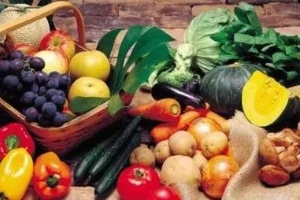
Preventive measures against heat damage:
1. choose to plant vegetable varieties that are suitable for local cultivation and have strong resistance to high temperatures and diseases.
2. intercrop with tall crops. Make full use of the shading effect of tall crops, and balance the combination of plants that prefer sunlight and those that prefer shade, such as interplanting corn with low-growing vegetables, planting vegetable crops between fruit tree rows, etc.
3. cover with cooling materials at the right time. For leafy vegetables grown in summer, it is best to build a shed and cover with shading nets to protect from sun and pests. You can also cover the protective film with shading nets. For bare crop rows, lay a layer of straw, crushed straw, etc. on the ground to prevent the soil temperature from being too high. For the fruits of vegetables exposed to the sun, cover them with weeds, old newspapers, etc. to prevent them from being burned by the sun.
4. utilize leaf shading to protect fruits. During high-temperature periods, make full use of the shading effect of stems and leaves to protect the fruits. For vegetable cultivation in summer, it is generally advisable to plant densely rather than sparsely, to exert the mutual shading effect and facilitate growth.
5. water reasonably. During high-temperature periods, increase the frequency and amount of watering appropriately. If conditions permit, use sprinkler irrigation or spray water on the leaves to prevent leaf dehydration. The time should be chosen in the early morning or evening, and do not water at high temperatures in the middle of the day. The water should be evenly and thoroughly applied to keep the soil moist. After a heat thunderstorm, drain the water promptly and irrigate with cold water to prevent heat damage.
6. focus on pest control. During high-temperature and drought conditions, pests such as thrips, aphids, whiteflies, leafhoppers, and mites are prone to damage. You can use pesticides such as imidacloprid, dinotefuran, ethephon, cypermethrin, and avermectin for control. Note that it is not advisable to spray pesticides in high temperatures.
Fruit trees
The impact of high temperature on fruit trees: After fruit trees suffer from heat damage, in addition to poor growth and development, they often exhibit cracked tree bark, burned branches, necrotic spots on leaves, darkening and yellowing of leaf color;The impact of high temperature on fruit trees: After fruit trees are affected by heat stress, in addition to poor growth and development, they often show cracked tree bark, burned branches, necrotic spots on leaves, darkening and yellowing of leaf color; when the fruits are slightly affected, they show delayed maturity, small size, poor color, aroma, quality and storage stability; when severely affected, fruit drop and tissue burning occur.
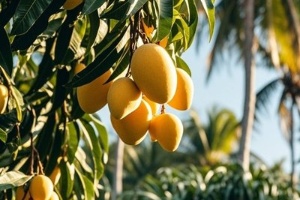
Preventive measures against heat stress:
1. timely replenish field water. When encountering hot and dry weather, timely irrigation should be carried out for fruit trees. By increasing soil water supply and improving the humidity condition of the orchard, the water demand of leaves for transpiration and fruit expansion can be met, alleviating the damage of drought and high-temperature heat stress to fruit trees. Try to irrigate in the morning or evening, and at night is also possible. In extremely dry conditions, it can be done in small amounts and multiple times, and it is not allowed to give excessive water at once to avoid cracking of the fruit.
2. increase orchard humidity. Through orchard sprinkler equipment, water or spray cooling and humidification are carried out on the tree canopy and between rows at dusk or at night to improve the microclimate of the orchard and alleviate the damage of high temperature and direct sunlight to the tree and fruit.
3. cover with moisture retention. Rice straw, leaves, etc. can be used to cover the tree disc to lower the soil temperature at the root zone and reduce water evaporation.
4. shade or whitewash the trunk. For newly built or young orchards, a small amount of corn or other tall crops can be planted in the row to provide shade. For mature orchards, it is necessary to apply whitewash to the trunk to reduce the impact of high temperature and drought on fruit trees.
5. regular fertilization. During the hot and dry period, regularly apply 600-800 times of phosphoric acid dihydrogen potassium solution to fruit trees to effectively inhibit the opening of leaf pores, reduce water evaporation of the tree body, and improve the drought resistance of the tree body.
6. prevent diseases and pests. During hot and dry weather, it is easy to cause the proliferation of mites, aphids and other pests and physiological yellow leaves, root rot outbreak. It is necessary to pay special attention to prevention. when the fruits are slightly affected, they show delayed maturity, small size, poor color, aroma, quality and storage stability; when severely affected, fruit drop and tissue burning occur.
Post time: Jun-02-2026
