


Red fire ants (Solenopsis invicta) have been a serious pest in the United States since their discovery in shipping between 1933 and 1945. Their stings cause excruciating pain and cost the United States over $8 billion annually. Today, red fire ants are found in 19 states, primarily in the Southeast, but also in California. They also breed in large numbers in Australia and China.
In 1958, the United States instituted a federal quarantine regime for the importation of fire ants to restrict the movement of plants and objects that could spread these insects. Most researchers and officials believe that the spread of fire ants is linked to the transport of seedlings. Nursery managers previously sprayed plant roots with pesticides to control fire ants, but the use of many such pesticides (such as chlorpyrifos) is now restricted, and these chemicals are expensive.
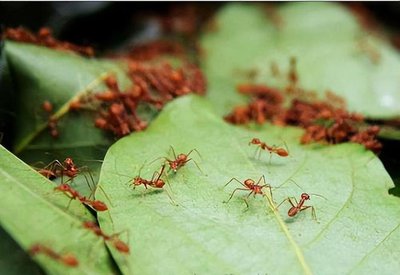
A research team from the USDA Agricultural Research Service, the Animal and Plant Health Inspection Service, and Tennessee State University studied methods for reducing fire ant populations using non-repellent pesticides applied to the root balls of seedlings. Non-repellent pesticides increase the risk of exposure to fire ants and can transfer toxic substances to other ants in the nest. The results of the study, published in March in the Journal of Economic Entomology, showed that the non-repellent pesticide fipronil significantly reduced fire ant populations in the root balls of seedlings.
The researchers placed fire ant colonies (including worker ants, eggs, larvae, pupae, and the queen) in the root balls of Buxus microphylla plants. Half of the root balls were treated with the insecticide bifenthrin. Four different non-repellent insecticides—fipronil, indoxacarb, imidacloprid, and fipronil—were then used as controls, along with water. The effects of various concentrations of non-repellent insecticides were also examined, and the effectiveness of residual insecticides in preventing ant infestations was determined.
Fipronil demonstrated the best insecticidal efficacy, with an average pest control efficiency of 99.99%, followed by indoxacarb (99.33%) and imidacloprid (99.49%). When these four non-repellent insecticides were combined with bifenthrin, their insecticidal efficacy was significantly reduced (except for fipronil, which achieved a control efficiency of 94.29%). To test the cost-effectiveness of fipronil in pest control, the researchers experimented with lower concentrations and found that insecticidal efficacy was reduced by more than 90%, and different fipronil concentrations had no significant effect on pest numbers. Using the recommended concentration of fipronil effectively prevented pest infestations for up to six months, while using half the dose resulted in residual pests in plant roots.
The researchers wrote: “Among the non-repellent insecticide treatments, dinotefuran (with or without bifenthrin) provided the most consistent quarantine-level control, with 75% (8) of the root bulbs remaining uninfested. Root bulbs treated with other non-repellent insecticides (imidacloprid, indoxacarb, and fipronil)… had uninfested rates of 0-38%.”
The researchers noted that fipronil is more expensive than two pesticides approved under federal fire ant quarantine regulations—chlorpyrifos and bifenthrin. Reducing the amount of fipronil used yielded encouraging results, but they wrote, “More replicated experiments are needed to definitively determine the effect of different fipronil concentrations on the number of uninfested and infested root bulbs.”
However, fipronil itself also presents some concerns. It is readily water-soluble, toxic to bees (Apis mellifera), and can be dispersed through runoff, sprays, and plants. Labeling regulations and restrictions are currently in place to reduce the impact of this insecticide on bees. The researchers noted, “For nurseries, applying fipronil only to the root balls of felled trees before flowering should reduce the risk of exposure to bees.” They added that further research is needed to determine the optimal approach for using such non-repellent insecticides to control red fire ants.
”Non-repellent insecticides are effective in controlling red fire ants (Hymenoptera: Formicidae) on field-collected seedlings.”
Andrew Porterfield is a writer, editor, and communications consultant working with academic institutions, companies, and nonprofits in the life sciences. He currently resides in Camario, California. You can connect with him on LinkedIn or by email at aporterfield17078@roadrunner.com.
The health of honeybee colonies improves when they produce more propolis (a waxy resin used to seal the hive). A new study tested several simple methods beekeepers can use to increase propolis production in the hive.
Ben Puttler, a professor emeritus at the University of Missouri and an entomologist, is known not only for his historic contributions to biological pest control but also for his generous mentorship of countless entomology students and colleagues. In a retrospective review of his career, two colleagues reflect on Puttler’s accomplishments and contributions.
The khapra beetle causes significant damage to stored grain and is a primary target at ports and border crossings. Canadian researchers have identified a threshold temperature that kills the beetle at all stages of its life cycle, including diapause.
Post time: Apr-13-2026
