


Overview of the Indonesian Pesticide Market
Indonesia is a highly influential agricultural country in the world, with a solid foundation in the agricultural industry and prominent product advantages. Currently, Indonesia is the world’s largest producer of palm oil, the fourth largest producer of rice, the second largest producer of rubber, and the largest producer of cloves. The output of several core crops ranks among the top in the world.
In terms of the scale of core crop cultivation, the layout and volume of various economic and food crops in Indonesia are well-defined and substantial. Among them, the planting areas of the two core crops, rice and palm, have both exceeded 10 million hectares, making them the core pillars of Indonesia’s agriculture.
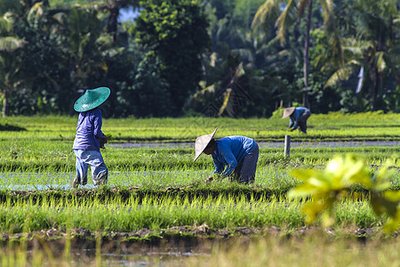
In 2024, the coconut planting area in Indonesia officially surpassed that of the Philippines, ranking first globally. The rubber and corn planting areas also exceeded 2 million hectares. The planting areas for cocoa, coffee, and fruits and vegetables all exceeded 1 million hectares.
It is worth noting that the planting area of Indonesian clove is only 500,000 hectares, yet it accounts for 80% of the global output, and the monopoly advantage in this industry is extremely significant.
Overall, the total area of agricultural land in Indonesia is 55 million hectares, and the number of people engaged in agriculture accounts for about 30% of the country’s total population. Both the scale of the land and the human resources reserve support a large-scale agricultural industry system. At the same time, Indonesia is located in the tropics, with hot and rainy weather all year round without distinct seasons. Crops grow continuously throughout the year, and there is no need for greenhouse cultivation to carry out farming throughout the year. However, the frequency of pest and disease infestations and the growth of weeds is high, which also makes the local demand for pesticides have the core characteristics of being constant and strong throughout the year.
Looking at the global pesticide market, Indonesia’s consumption volume is also among the top. The country with the largest global pesticide usage is Brazil, which has a huge demand due to its large-scale genetically modified soybean cultivation industry.
With its favorable agricultural planting conditions, Indonesia’s annual pesticide usage amounts to nearly 300,000 tons, ranking third globally. Among the key data, the unit pesticide usage in Indonesia is as high as 6.68, which is at a high level among major agricultural countries worldwide. This is also a crucial evidence demonstrating the vigorous vitality and strong demand in the Indonesian pesticide market.
Among the annual pesticide usage of nearly 300,000 tons, the category structure is highly distinctive.
Due to the rampant growth of weeds caused by the tropical climate, herbicides have become the largest demand category, accounting for 45% of the total usage. Among them, the two major products, glyphosate and paraquat, have the largest volumes. The combined usage of these two accounts for 40% of the total pesticide usage in the country, approximately 120,000 tons. The remaining 50% or so of the share is occupied by insecticides and fungicides, mainly used for economic crops such as rice and fruits and vegetables. These crops have a high incidence of pests and diseases, and there is a more urgent need for insecticidal and fungicidal pesticides.
From the perspective of market size, the overall scale of the pesticide market in Indonesia is 4.71 billion US dollars. The industry growth rate is stable and it is expected that the market size will increase to 5.6 billion US dollars by 2030, with a considerable growth potential.
However, at the same time, the local pesticide industry in Indonesia has significant shortcomings in its supporting infrastructure, which is also a core opportunity for foreign enterprises to enter the market.
The local chemical supply chain system in Indonesia is weak, and only a few categories of pesticides can be produced independently. Currently, there are over 500 enterprises in Indonesia that have obtained compliant registration certificates, but only 20 to 30 of them have the facilities for independent production and can independently manufacture. At the same time, recently the Indonesian Ministry of Agriculture has continuously tightened the import policies for small packaging pesticides. The previous model where enterprises could directly import finished packaged pesticides from the domestic market has become unsustainable. The demand for local packaging and processing has rapidly increased, providing a new development window period for enterprises with the ability for local production and processing.
Characteristics of Pesticide Consumption in Indonesia
Pesticide consumption in Indonesia shows a starkly divided pattern. The medication logic, procurement demands, and decision-making criteria for the two consumption models are completely different. The core can be divided into two categories: large-scale plantation economies and decentralized small-scale farming economies.
The first category consists of large-scale plantations, mainly located on Sumatra Island and Kalimantan Island. The core crop varieties include palm, rubber, and other long-term economic crops.
These crops have stable growth characteristics and few pests and diseases, so they require very little pesticides and fungicides. However, the pressure for controlling weeds throughout the year is extremely high. The demand for herbicides is constant throughout the year and is an absolutely core consumer category.
The second type is decentralized small-scale farming, mainly found in regions such as Java Island and Sulawesi, with crops like rice, chili peppers, potatoes, shallots, tomatoes, and other food and fruit vegetables being the main focus.
These crops are prone to pests and diseases in hot and humid environments. A single application of pesticide often fails to completely solve the problem, and multiple repeated applications are necessary. This is the main reason why the pesticide usage per unit in Indonesia is far higher than the global average and even exceeds that of China.
The differences in the consumption decision-making logic between the two modes are significant.
Firstly, there is the small-scale farming group. On the Java Island, the population is dense and the farmland is fragmented. The average size of each farmer’s single plot of land is generally less than 1 hectare, and most of them have only three to five acres. Due to the limitation of the farmland size, farmers do not purchase large-sized pesticides to avoid the waste of the chemicals. At the same time, the local farmers have limited cultural levels and professional planting knowledge, and their consumption decisions are extremely pragmatic. They prioritize solving the current pest and disease problems and do not consider the overall drug usage cost for the entire season of planting. Therefore, terminal factors such as retailer profit margins, store promotion policies, and rebate discounts are the key factors determining the small-scale farmers’ purchasing choices, rather than the overall cost performance of the drugs themselves.
However, the decision-making logic of large-scale plantations is completely different. The farmland areas of these plantations often reach tens or even hundreds of thousands of hectares. The operation system is standardized and refined, and the cost of pesticides is included in the comprehensive accounting of the annual planting output revenue.
For large-scale plantations, the cost of purchasing pesticides accounts for less than 1% of the overall planting cost. The efficacy, stability and timeliness of the pesticides are far more important than the price. The core demand is to efficiently and thoroughly address the problems of weeds, diseases and pests, and ensure the smooth progress of the planting plan.
In addition, the supply chain timeliness requirements in the remote areas of Indonesia are extremely high, which is a unique pain point that does not exist in the domestic market. The core planting areas such as Sumatra, Kalimantan, Sulawesi, and Papua are far from the industrial center of Java Island, and the logistics distribution is difficult and takes a long time.
Small-scale farmers can adjust the timing of pesticide application flexibly. Even when there is no pesticide available, they can manually weed. The error tolerance rate is extremely high. However, in large-scale plantations, the entire process of weeding, pesticide application, harvesting, and fruit production is standardized and planned in advance. Once the pesticide cannot be delivered on time, the entire planting plan will be postponed.
After the delayed application of pesticides, the workers who were originally assigned to this project will be reassigned to other parks. The enterprise will need to recruit new workers, resulting in high additional costs. Originally, the overall cost of pesticide application on one hectare of land was controllable. Once the application cycle is missed, the costs of labor, rework, and materials will add up, and the expenses will increase exponentially.
Therefore, large-scale plantations have extremely strict requirements for the timeliness, stability and supply chain capabilities of pesticide supplies, and these are the core competencies that the entering enterprises must overcome.
Meanwhile, the medication habits of local farmers have further increased the overall medication volume. Taking the vegetable-producing areas around Jakarta such as Bandung as an example, local farmers generally have a lagging medication habit of treating diseases and pests immediately upon occurrence, without taking preventive measures or applying medication scientifically. Moreover, farmers prefer traditional pesticides, with a large single application dose and poor efficacy. They often need to apply the medication two to three times to solve the problem. Some farmers also mix multiple pesticides themselves, further increasing the overall pesticide consumption.
This also explains why Indonesia’s cultivated land area is only one-fifth to one-third of that of China, yet its per-unit pesticide usage is much higher than that of China.
There are also two hidden industry rules that foreign enterprises tend to overlook.
The first is the compliance requirements for the residual effects of pesticides in long-lasting crops.
Palm trees, fast-growing forests, rubber, etc. are all long-term-growing crops. The growth cycle of palm trees lasts for 25 years, while fast-growing forests can be harvested and cut down after 3 years. Therefore, when using pesticides, we cannot only consider the short-term efficacy but must also take into account the long-term residual effects over 3 years, 5 years, or even 25 years.
For instance, some pesticides have a soil residual period of up to 8 years. Their use in the cultivation of fast-growing forests can seriously affect the growth of the next round of seedlings. Even if the pesticide has excellent efficacy, it cannot be widely used locally. Enterprises need to conduct pre-verification of efficacy and safety based on the characteristics of the crops, and the verification period can be as long as 2 to 3 years.
The second aspect is the international regulatory compliance for export crops.
Indonesia exports a large amount of its core crops such as palm oil, paper, and coffee to the European and American markets. These exports need to comply with international sustainable development regulatory standards.
Among them, international standards such as RSPO and FSC have explicitly restricted and prohibited the use of several types of pesticides. This means that enterprises entering this sector must ensure that their products meet the international export compliance requirements in order to enter the supply chain of high-end large-scale plantations.
Investment Opportunities in Pesticides in Indonesia
The pesticide market in Indonesia has great potential and abundant opportunities, but it has a low level of market standardization and faces high risks. When entering the Indonesian market, one must avoid overreaching and making hasty moves, and instead, adopt a patient and meticulous approach, deeply establish a presence, make steady plans, and be prepared for long-term operations.
From the perspective of risk control, there are three key points that are crucial.
Product registration compliance risk
As the regulatory environment for the Indonesian industry continues to tighten, the previous chaotic situations such as the hidden addition of ingredients, the sale of highly toxic and highly residue-containing chemicals, and products with non-standard contents have been comprehensively rectified.
Such non-compliant products have gradually been eliminated from the market.
The core trend of the future market is low-toxicity, environmentally friendly, high-concentration, and new-formulation products. Only those that are compliant, traceable, green, and efficient can gain a long-term foothold in the market.
2. Channel and Funding Risks
The Indonesian islands are scattered and the market layout is fragmented, which leads to high costs for channel establishment and market operation. Enterprises entering the market must avoid aggressive expansion and blind stocking. They must strictly select agents and distributors, establish a complete credit assessment and credit control system, strictly control the risk of bad debts in the channels, and steadily expand the market.
3. Seasonal timing risk
Agricultural production is highly seasonal. The demand for pesticides peaks during the planting period. Missing the application season will result in the product losing its market value completely.
Some crops are harvested only once a year. If the supply is delayed, the products will be stored in warehouses for up to a year, resulting in high capital occupation and storage costs, which directly reduces the profit margin of the enterprises. Therefore, the control of supply chain efficiency is the core key to achieving profitability.
Based on the above market characteristics and risk points, the four core investment opportunities are also the core development directions of the future Indonesian pesticide industry.
1. Emphasize the development of high-concentration, high-quality, new-formulation and differentiated products to replace the traditional low-end products.
Traditional products with low content, high toxicity and high residue do not meet the industry compliance and market demands. High-content premium agents can effectively reduce the amount of pesticide used per unit of cultivated land, resulting in lower overall planting costs and more stable efficacy.
Meanwhile, new formulations such as binary and ternary combinations, as well as new dosage forms, can significantly enhance the efficiency of pesticide application and reduce the cost of pesticide usage. Compared with traditional products, they possess extremely strong market competitiveness.
At the same time, refinement and brand differentiation are the keys to breaking through quickly.
At present, most Chinese-funded and local enterprises in the Indonesian market are trapped in a vicious cycle of low-price competition, lacking brand premium and earning meager profits. In contrast, multinational enterprises, leveraging their brand advantages, occupy the high-end market and enjoy high premiums.
Let’s take a practical case as an example. In the Indonesian market, traditional carbendazim fungicides were all in earthy yellow or gray colors. A domestic enterprise that entered the market was the first to launch a similar product in blue. By leveraging its distinctive visual advantage, it quickly seized the market and experienced continuous demand for two consecutive years, leading the industry trend.
This further confirms that in a highly homogeneous market, even a minor form of differentiated innovation can create a core competitive advantage.
2. Focus on local manufacturing + local warehousing + local supply chain to build a core competitive advantage
The pure import model has many drawbacks such as high tariff costs, poor logistics efficiency, and unstable supply. In contrast, local production and warehousing enterprises can enjoy tariff reduction benefits, significantly reducing product costs.
More importantly, in the official government procurement and large state-owned enterprise plantation bidding projects in Indonesia, only local manufacturing enterprises are eligible for participation. Purely imported products are completely excluded from the bidding process. The ability to establish a localized supply chain is not only a cost advantage but also a resource barrier.
3. Shift from selling products alone to an integrated approach of “products + agricultural services”, in order to tap into additional profits.
As Indonesia’s economy develops, the number of people engaged in agriculture continues to decline, and labor costs are rising year by year. The traditional manual planting and pesticide application methods have gradually been phased out.
According to research, before 2019, local farmers had extremely low acceptance of services such as drone spraying and mechanized harvesting. However, after three years of the pandemic, the industry underwent rapid evolution. Since 2022, the demand for agricultural social services has exploded in full force, and farmers have actively purchased customized services such as drone spraying and mechanized harvesting.
Simply selling pesticide products leads to severe market homogeneity, with transparent prices and no room for premium pricing. However, the “pesticide products + customized agricultural services” model not only can boost product sales but also can generate excess profits through differentiated services. This is an emerging growth area for the industry in the future.
Post time: Jul-29-2026
