


Recently, the National Agricultural Technology Center, in collaboration with the Institute of Plant Protection of the Chinese Academy of Agricultural Sciences and other organizations, has formulated and released the “Technical Guidance for Using Agricultural Unmanned Aerial Vehicles to Control Major Pests and Diseases of Corn”. The aim is to enhance the scientific and standardized level of agricultural unmanned aerial vehicle application in the prevention and control of major pests and diseases of corn, and to solve the problems in the prevention and control of pests and diseases in the middle and late stages of corn.
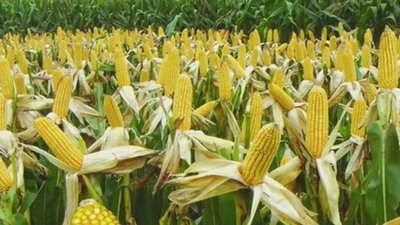
Technical Guidance on Using Agricultural Unmanned Aerial Vehicles for Pest Control and Disease Prevention of Major Maize Pests and Diseases
According to the prediction of the National Agricultural Technology Center, in 2026, the overall occurrence of corn diseases and pests in the country will be relatively severe. Among them, pests such as corn borers, cotton bollworms, and stick insects will occur more severely in some areas of Northeast China and the Yellow-Huaihai Plain. The stem rot disease will have a high risk of reoccurrence in the Yellow-Huaihai Plain, Southwest China, and Northeast China.
1. Correct selection of control agents
(1) Focus on the appropriate prevention period. Based on the occurrence period, type, and severity of corn diseases and pests, determine the main targeted pests and the appropriate prevention period according to local conditions.
From the large ear-harvesting period to the pollen-extraction stage, the northeastern region focuses on preventing and controlling pests and diseases such as corn borer, aphids, double-spotted long-legged leaf beetle, large spot disease, and gray spot disease; the Huaihai region focuses on preventing and controlling pests and diseases such as corn borer, sticky insects, stem rot disease, southern rust disease, and small spot disease; the northwest region focuses on preventing and controlling pests and diseases such as corn borer, sticky insects, red spider mites, double-spotted long-legged leaf beetle, stem rot disease, and large spot disease; the southwest region focuses on preventing and controlling pests and diseases such as grassy stem borer, corn borer, sticky insects, stem rot disease, and large spot disease.
From the stage of grain formation to the milk stage, in the Northeast region, the main pest control focuses on corn borers, slugs, double-spotted long-legged leaf beetles, smut diseases, major spot diseases, and gray spot diseases; in the Huang-Huai-Hai region, it mainly targets corn borers, peach borer, cotton bollworms, smut diseases, southern rust diseases, and small spot diseases; in the Northwest region, it mainly controls corn borers, red spider mites, double-spotted long-legged leaf beetles, smut diseases, major spot diseases; in the Southwest region, it focuses on grasshopper-borne maize, corn borers, smut diseases, major spot diseases, and gray spot diseases.
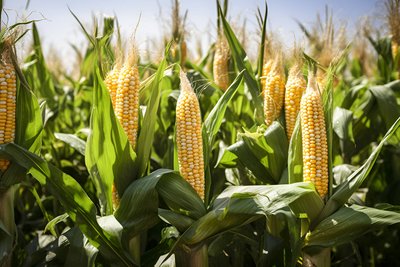
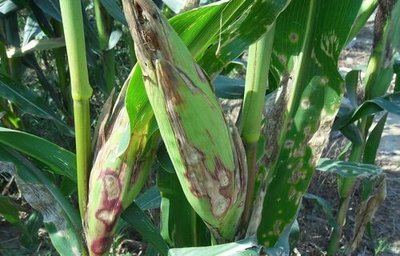
(2) Select appropriate pesticides. For the prevention and control of pests such as the green stem borer, the sticky moth, and the corn borer, pesticides should be applied during the larval stage at an early age. Suitable pesticides include Bacillus thuringiensis, chlorpyrifos-methyl, methamidophos-aminobenzoate, and ethyl polyhydroxybenzyl imidazoline. For the control of aphids, pesticides should be applied during the initial outbreak stage. Suitable pesticides include thiamethoxam, thiamethionam, and imidacloprid. For the control of peach borer and cotton bollworm, pesticides should be applied during the larval stage at an early age. Suitable pesticides include tetra-cyanothiamamide, chlorpyrifos-methyl, methamidophos-aminobenzoate, and cypermethrin. For the control of diseases such as large spot disease, small spot disease, southern rust, and gray spot disease, pesticides should be applied during the initial stage of the disease outbreak. Suitable pesticides include flufurafos-dimethylamine, pyrazofamet, cipcon-pyrimidinethione, and oxamoxazin-pentazole. For severely affected fields, a second application can be made 7-10 days later. For the control of ear rot disease, pesticides should be applied during the initial stage of the disease outbreak. Suitable pesticides include pyrazofamet, flufurafos-dimethylamine, and ethylate. In addition, during the “one spray for multiple promotions” operation, appropriate plant growth regulators can be added to improve the health of corn plants and prevent premature aging and promote yield increase.
II. Selecting the appropriate dosage form and adding blending aids to the tank
(1) Select the appropriate dosage form scientifically. The pesticide dosage forms suitable for the operation of agricultural drones include suspension agents, dispersible oil suspension agents, water-based agents, water emulsions, microemulsions, water-soluble granules, and emulsifiable oil solutions. Powders and wettable powders have relatively poor compatibility. When mixing multiple pesticides, it is recommended to add them in the following order: water – solid agents (water-soluble granules) – suspension agents (dispersible oil suspension agents, suspension agents) – emulsion agents (microemulsions, water emulsions) – dispersion liquid agents (emulsifiable oil solutions). After adding each pesticide, ensure thorough mixing to achieve a stable, non-dissolved, and non-segregated solution before adding the next pesticide. This prevents the formation of clumps, clogging of the nozzle, or reduction of the pesticide efficacy.
(2) Standardize the addition of bucket mixing additives. Before conducting the spraying operation, an appropriate amount of bucket mixing additives should be added to the pesticide solution to improve its performance, promote droplet settling, reduce drift loss, enhance resistance to rain erosion and evaporation, and effectively enhance the control effect. Priority should be given to using special additives for aerial spraying, and attention should be paid to compatibility with the pesticides used. Avoiding the failure of the pesticide solution or adverse reactions. Generally, the additive should be added at a rate of 0.5% – 1% of the spraying liquid volume. The addition amount can be appropriately adjusted according to the type of additive, the concentration of the pesticide solution, and the operating environment.
III. Strictly abide by the requirements for aerial spraying.
(1) Work Area. Conduct pesticide spraying operations using agricultural drones in an open and well-ventilated area. Before the spraying operation, conduct an investigation of the surrounding environment of the spraying area, determine the spraying boundary, comprehensively assess potential risks, and prevent the drift of pesticide droplets from causing harm to non-target organisms and crop damage in the surrounding area. Within 200 meters downwind of the spraying area, there should be no nectar-producing plants.
(2) Working environment. During pesticide application, the wind speed in the environment should be less than level 3 (≤ 3.4 m/s), and the environmental temperature should be between 15℃ and 30℃. Each region can determine the appropriate application time based on actual conditions, and it should avoid the period above 30℃. If there is heavy fog or dew, the pesticide application should be carried out after the fog and dew have dissipated.
4. Reasonably set the operation parameters
(1) Basic operation parameters. The spraying parameters of different agricultural drones vary. Factors such as the size of the aircraft, the downward wind field, the growth stage of corn, and the types of pests and diseases to be controlled should be comprehensively considered. Appropriate flight parameters should be set to ensure uniform spraying, no over-spraying or missed spraying, minimal drift loss, and no damage to the plants. Before large-scale spraying, uniformity and stability tests of the operation should be conducted. As the aircraft load increases, the flight altitude should be appropriately raised, and the flight speed should be appropriately reduced.
(2) Different operation methods under different weather conditions. During pesticide application, the operation route and parameters should be adjusted according to the actual conditions such as wind speed and direction, and the operation plan should be tailored to local circumstances. To reduce drift caused by crosswinds, the flight direction can be set parallel to the wind direction. To increase the deposition of the pesticide solution, when the flight direction is opposite to the wind direction, the flight speed can be appropriately reduced; when the flight direction is the same as the wind direction, the flight speed can be appropriately increased.
(3) Operating parameters from the large-bore nozzle to the anthesis stage. This stage is a critical juncture for controlling pests and diseases in corn. The field is densely covered with plants, and the operation should ensure both uniform coverage of the pesticide solution and the safety of the plants. It is strictly prohibited to apply pesticides during the anthesis and flowering period to avoid interfering with pollination. For multi-rotor agricultural drones with a load capacity of 50L to 70L, in planting areas with a density of 4500 to 8000 plants per acre, the most suitable operating parameters are a pesticide application volume of 2L/acre to 2.5L/acre, a flight height of 3.5m to 4m, and a flight speed of 3m/s to 5m/s; in planting areas with a density of 4000 to 4500 plants per acre, the most suitable operating parameters are a pesticide application volume of 1.5L/acre to 2L/acre, a flight height of 3.5m to 4m, and a flight speed of 3m/s to 5m/s.
(4) Operating parameters from the stage of corn grain formation to milk stage. During this period, the corn plants are densely planted and the husks are tightly wrapped. The agricultural drone must avoid flying at too low an altitude or at too high a speed, as this could result in insufficient penetration of the pesticide or drift damage. For multi-rotor agricultural drones with a load of 50L – 70L, in planting areas with a density of 4500 – 8000 plants per acre, the most suitable operating parameters are a pesticide application volume of 2.5L/acre – 3.5L/acre, a flight altitude of 3.5m – 4m, and a flight speed of 3m/s – 5m/s; in planting areas with a density of 4000 – 4500 plants per acre, the most suitable operating parameters are a pesticide application volume of 2L/acre – 3L/acre, a flight altitude of 3.5m – 4m, and a flight speed of 3m/s – 5m/s.
Furthermore, when preparing the multi-effect-promoting spray solution in the bucket, a stability test for the drug mixture should be conducted first to ensure there are no physical or chemical reactions such as layering, flocculation, or precipitation. Only after confirming that there are no such reactions can large-scale unified pest control be carried out.
V. Standardize pesticide application operations
(1) Ensure personnel qualifications and safety protection. Workers should hold valid certificates and wear necessary protective gear; standardize area safety management. During aircraft takeoff and landing, they should stay away from obstacles, high-voltage lines and people, maintaining a safe distance.
(2) Conduct quality pre-control before spraying. Before conducting the spraying operation, test cards for droplet density can be placed on the corn plants in advance for droplet density detection and evaluation of the spraying operation quality; to ensure the operation quality and control effect from the large ear stage to tasseling, and from grain formation to milk ripening stages, it is recommended that the droplet density be ≥ 30 droplets per square centimeter.
(3) Strictly control on-site safety. During pesticide application operations, all workers should be positioned in the upwind direction of the spray area and are strictly prohibited from walking through the pesticide application area; the operator must not eat, smoke, or make phone calls; they should keep their eyes on the agricultural drone and the remote control at all times. In case of any emergency, they should handle it promptly; no one is allowed to walk in the take-off and landing area to avoid causing injuries to personnel.
(4) Standardize the post-operation assessment. After the pesticide application operation is completed, for areas that were not sprayed due to obstacles or corners, timely manual re-spraying should be carried out; clean and maintain the pesticide boxes, nozzles, etc., and hand over the packaging waste to the business store or packaging waste recycling station (point); regularly investigate the control effect of pests and diseases and assess the quality of the pesticide application operation.
Post time: Jun-15-2026
