


University City, Pennsylvania — Winter wheat is widely grown on poultry farms in the Mid-Atlantic region of the United States for both grain and straw production. The grain is used as animal feed, and the straw is used as bedding. Application of growth regulators can increase grain yield by suppressing vertical growth and reducing the risk of lodging, a condition that significantly reduces grain yield. However, the effect of growth regulators on yield and straw quality remains unclear. Therefore, a research team from Pennsylvania State University conducted a study to evaluate the effects of combining growth regulators with different nitrogen fertilizer application rates. The study was conducted in winter wheat field trials at the Russell E. Larson Agricultural Research Center at Pennsylvania State University.
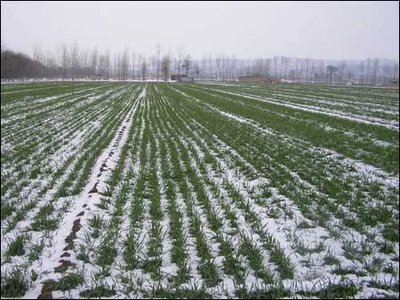
”Farmers don’t want wheat to become overgrown and lodge, which damages the grain, so many farmers have long used plant growth regulators,” says Daniela Carrijo, associate professor of grain production and extension specialist in the College of Agricultural Sciences at Pennsylvania State University. “We know that plant growth regulators can reduce the risk of lodging and increase grain yield, but farmers and some stakeholders want to know their impact on yield and straw quality. This is a project with practical implications, and we tested a commonly used product called tricyclazole ethyl ester to determine its impact on yield and straw quality, which is also important for mixed-crop farms.”
Over the course of more than two years, researchers tested nine combinations of three nitrogen fertilizer application rates and three tricyclazole ethyl ester treatments. They found that tricyclazole ethyl ester reduced plant height but did not increase stem thickness. Two tricyclazole ethyl ester treatments resulted in an 8% reduction in straw yield, while a single treatment reduced straw yield by 5%, although this difference was not statistically significant. They also found that tricyclazole ethyl ester did not alter straw quality or water absorption—meaning it did not affect the straw’s ability to retain water, so the straw could still be used as animal bedding. The researchers reported that lodging was not observed in any of the experimental plots, and that increasing nitrogen fertilizer application improved grain protein content.
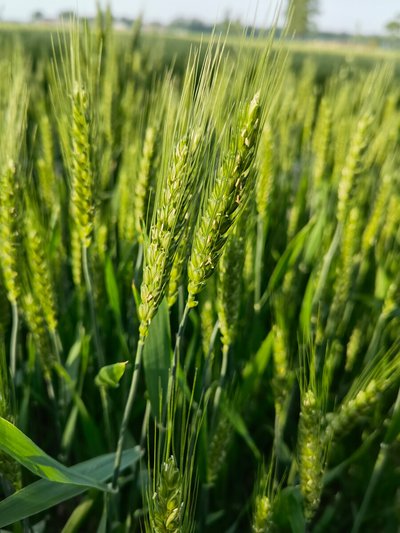
”Our results are mixed—we found that tricyclazole ethyl ester may slightly reduce straw yield, but does not affect straw quality or grain yield,” Carrijo said. “Farmers using tricyclazole ethyl ester should weigh the pros and cons: it may help reduce lodging (if this is a problem), but may slightly reduce straw yield. This tradeoff is especially important if straw is an important farm product and is used as bedding.”
The study’s first author, Larissa Correa, was a visiting research fellow in the Department of Plant Science at Pennsylvania State University. She is currently a postdoctoral fellow at the University of Wisconsin-Madison. Ronald Hoover, senior associate program director in the Department of Plant Science, also participated in the study.
The research was funded by Syngenta and the U.S. Department of Agriculture’s National Institute of Food and Agriculture.
Post time: May-13-2026
