


In the first half of 2026, the registration of pesticides in China continued to expand, with preparations remaining the dominant category. According to statistics (based on the date of the first approval of the PD certificate), a total of 2,133 registration certificates were approved in the first half of the year, representing a year-on-year increase of 22.2%. Among them, there were 2,005 preparations (a year-on-year increase of 23.2%); 128 raw materials and mother substances (a year-on-year increase of 9.4%).
However, what is more worthy of enterprises’ attention than merely “quantity growth” is: Which pesticide categories, formulations, crops and targets are the newly registered products flowing towards? Do they truly respond to policy directions and the actual agricultural production needs? This article will reveal the latest industry trend by deeply analyzing the registration data of formulation products in the first half of 2026.

The registration volume has been increasing year by year, and the formulation remains the core focus of the enterprises’ strategies.
From 2020 to 2025, the number of PD registration certificates was 793, 2,458, 438, 1,009, 2,376 and 4,381 respectively. Due to the impact of the policy transition period, the registration numbers fluctuated significantly from 2020 to 2022, but have been growing continuously for three consecutive years since 2023. In the first half of 2026, this growth trend continued, and the growth rate of formulation registrations was higher than that of raw materials and parent substances, making them the main force of new products.
At the same time, the participants in the registration market are also expanding. In 2025, a total of 841 enterprises obtained new registration certificates, and the share of new certificates of the top ten enterprises decreased from 13.5% in 2020 to 8.9%. The distribution of new certificates showed a trend of dispersion, and the product layout around mature ingredients and common prevention and treatment scenarios has evolved into a competitive landscape involving multiple entities.
The scale of fungicides has expanded significantly, and the competition among mature ingredients has intensified due to homogeneity.
In the first half of 2026, herbicides, insecticides, fungicides and plant growth regulators accounted for 29.5%, 28.9%, 25.3% and 11.6% of all PD certificates respectively.
❖ The quantity of fungicides saw the most significant growth: 540 certificates were approved in the first half of the year, a substantial increase of 39.2% compared to the same period last year (388 certificates).
❖ The registration share of insecticides rose from 22.3% in 2020 to 28.9%, approaching that of herbicides.
❖ The proportion of herbicides decreased compared to 37.3% in 2020, but the absolute quantity remained the largest category of new certificates.
Mature active ingredients continue to attract enterprises to invest, and new registrations are highly concentrated on some popular ingredients. According to the components of newly approved formulation certificates (including single agents and mixtures), the currently most concerned components include:
The dense registration of mature active ingredients reflects the prominent homogeneity of current product layout. The repeated development of the same active ingredients and common combinations will inevitably lead to more intense market competition among similar products.
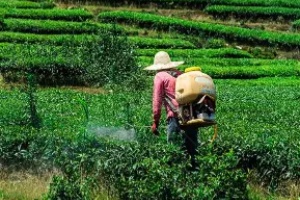
The combination formulations continue to dominate, and the core of competition shifts to “necessity and differentiation”.
Blended formulations have always been the main force in the registration of pharmaceuticals. Their proportion has continuously increased from 57.3% in 2020 to 68.1% in the first half of 2026 (reaching a peak of 70.1% in 2024 and remaining at a high level thereafter). There are a total of 20 blended combinations of active ingredients corresponding to 10 or more registration certificates. Similarly, in 2025, there were 93 combinations of active ingredients corresponding to 10 or more registration certificates.
Analyzing the registration purposes of some products, it was found that some mature blended combinations not only have repeated active ingredients, but also have highly overlapping total contents, dosage forms, and registration control scenarios; some other combinations form usage differences through different crops and targets.
❖ Chlorfenapyr·Amidofluorfen (28 certificates): The usage is highly concentrated. 25 certificates (accounting for 89.3%) all only register for “rice – rice stem borer”;
❖ Chlorfenapyr·Isocarbophos (16 certificates): There is a clear layout in the same scenario. 9 certificates (accounting for 56.3%) all only register for “cabbage – small cabbage moth”;
❖ Propiconazole·Zinethrin (15 certificates): The crops are the same, the core targets are the same, but the complete usage is different. 15 certificates cover “wheat – Fusarium head blight”; 6 certificates only register for Fusarium head blight, and the remaining 9 certificates add registration for powdery mildew and/or rust.
❖ Pyrazofenone·Fluconazole (15 certificates): The usage is relatively scattered. 15 certificates cover 4 crops and 7 “crop-target” combinations. Among them, 6 certificates have exactly the same usage, only registering for “wheat – Fusarium head blight”.
Furthermore, single agents also demonstrated high activity. For instance, the single agent of glufosinate-ammonium was approved for 46 applications, but 50% of the 20% glufosinate-ammonium salt aqueous solution was concentratedly registered for the control of weeds in non-cultivated land. The repetitive layout of similar combinations has become quite obvious.
Of course, the registration of the same active ingredient combination or single agent does not mean that the market is severely saturated. Single agents with clear pest and disease control positioning and usage advantages still have layout space. In the face of competition, the breakthrough direction lies in clarifying the product’s usage advantages and differentiated positioning:
❖ Insecticide/Bactericide: It can focus on the effective control and resistance management of target pests and diseases.
❖ Herbicide: It can break through by focusing on the differences in crop safety, target weed spectrum, resistance management, and application period.
❖ Overall strategy: Through new formulation development, reasonable mixing, and expanding the application scope, to extend the application value of mature ingredients, is an important path for formulation enterprises to break away from low-efficiency internal competition.
Policy adjustments have further raised the threshold for “differentiated development”. The revised relevant regulations that came into effect on January 1, 2026, imposed stricter restrictions on the gradient of single-agent content, the quantity and ratio of mixed active ingredients. Subsequently, the draft for soliciting opinions on the “Pesticide Registration Materials Requirements” released on July 31st even explicitly stated: New formulations, new mixtures, and new content formulations should provide supporting materials demonstrating their necessity, scientificity, and rationality compared to registered products.
Therefore, the development focus of new mixtures must fall on three core values: improving efficacy or expanding the control spectrum, forming a scientifically based resistance management combination, and improving application efficiency while also considering crop safety. For areas with many similar combinations, solid verification data and obvious product advantages will be the absolute key to supporting the necessity of development and market competitiveness.
The trend of formulation optimization is remarkable. “Low toxicity” does not mean “low risk”.
From the perspective of specific dosage forms, the registration of preparations has further concentrated on suspension types and solutionable preparations. The combined proportion of these two types of preparations in the newly registered preparations increased from 41.1% in 2020 to 58.5% in the first half of 2026; during the same period, the combined proportion of emulsifiable oil, wettable powder and other powders decreased from 18.2% to 10.5%.
Suspension preparations and water-based products have formed a large scale of registration supply. When enterprises develop dosage forms, they should combine the target crop, the pest or disease to be controlled and the application method, and form verifiable advantages in terms of preparation stability, ease of use and reduction of dosage and increase of efficiency: such as improving stability, reducing solvents or dust, improving deposition and drift control, adapting to low-capacity application, and enhancing the convenience for farmers.
In terms of toxicity, in the first half of 2026, the proportion of slightly toxic and low-toxic preparations was as high as 94.9%. The “low toxicity” has become a common feature in acute toxicity levels, but enterprises need to be vigilant: “low toxicity” does not mean “low risk”. Residue control, non-target organism safety, environmental impact and use exposure management are still important contents in product development. Integrating these requirements with efficacy and dosage form performance for comprehensive design can better implement the product orientation of high efficiency and low risk.
The registration layout is concentrated on grains and vegetables, while the shortcomings in pesticide use for specialty and minor crops still need to be addressed.
1. Grains and vegetables: The registration layout is concentrated, and product differentiation needs to be focused on specific pest control requirements
Grain crops and vegetables constitute the main body of the registration layout for preparations in the first half of the year. In the recorded uses of newly approved preparation certificates in the first half of 2026: Rice, wheat, and corn accounted for 43.4%, vegetables and edible fungi accounted for 22.8%, and the combined total of the first two accounted for 66.2%; fruits and fruit trees accounted for 14.4%; soybeans and oilseeds accounted for 6.9%; tea and specialty economic crops accounted for 3.8%.
Specifically, rice, wheat, and corn each have 452, 378, and 161 use items respectively; among economic crops, there are 151 items for citrus, 134 for cucumbers, 106 for cabbage, 98 for peanuts, 54 for grapes, and 52 for tomatoes. Compared with 2020, the share of uses for fruits and fruit trees decreased from 18.4% to 14.4%, and that for tea and specialty economic crops decreased from 7.5% to 3.8%. The focus of newly registered uses has further concentrated on scenarios that ensure the safety of grains and the “vegetable basket”.
For the development of preparations around these crops, it is necessary to further clarify the specific problems that the products aim to solve:
❖ For grain crops: Emphasize large-scale production guarantee, focus on stable efficacy, crop safety, and application efficiency;
❖ For fruits and specialty crops: Balance yield and quality, pay more attention to the protection of commerciality, harvest period compatibility, and safe use.
In scenarios with a large number of registered products, products that can improve actual pest control performance, adapt to cultivation management, and application methods are more likely to form differentiated positioning.
2. Frequent pest and disease infestations: Resistance management and pesticide application compatibility remain key development focuses
In the formulation application items for the first half of 2026, diseases, weeds and pests accounted for 27.9%, 27.8% and 23.6% respectively, being the main areas of control. Among the specific targets, there were 332 species of annual weeds, 120 species of aphids, 96 species of powdery mildew, 81 species of scab, 63 species of thrips, 52 species of small cabbage moth, and 35 species of root-knot nematodes. This reflects the enterprises’ continuous layout towards these targeted pests.
For these frequent targets, the focus of product upgrading lies in supplementing effective control options and enhancing the compatibility of resistance management and field application scenarios. The active ingredients of these high-frequency products mainly involve FRAC 3, 11, 7 groups, IRAC 28, 4A, 6, 13 groups, as well as HRAC 5, 15, 2, 27 groups. Developing based on specific scenarios where existing pesticide products have decreased sensitivity, insufficient effective rotation options, or unstable application effects, can make the product advantages more targeted.
The “chlorfenapyr·aminothiophosphonic acid” (IRAC 28+6) and “pyrazofamycin·fluconazole” (FRAC 11+3) approved in the first half of the year are examples of the development of different mechanism combinations. The value of the mixed product’s resistance management requires verification in combination with the sensitivity of the target organisms, the effective doses of each component, field efficacy, and application schemes. Considering these factors in conjunction with formulation performance, crop safety, and application conditions can transform the differences in component combinations into actual usage advantages.
3. Specialized Minor Crops: Supply Continues to Improve, but Shortcomings in Certain Targeted Drug Applications Still Need to Be Addressed
By the end of 2025, the registered products for specialized minor crops have reached 8,652, covering 178 specialized minor crops. The overall supply has continued to improve, but the effective drug application options for some crops and targets are still limited. Based on the new registrations in the first half of the year and the current national pesticide registration data, the following three cases are representative:
❖ Leek – Leek Maggot (Similar combinations are concentrated, with the development focus being on effective rotation and root zone application adaptation): Leek was once included in the list of specialty minor crops with supply shortages. In the first half of this year, there were 13 new formulation certificates involving leek maggots, of which 6 were “fenitrothion·thiamethoxam”; among all the registered products, there are 40 registrations of this combination for leek – leek maggots, all of which are suspensions, and 35 of them have a total content of 28%. The development of products in this scenario requires more attention to effective rotation selection, root zone control performance, and adaptation to harvest arrangements.
❖ Strawberry (Continuous Harvesting and Disease Pest Control Overlap, Higher Requirements for Product Usage Adaptation): In the first half of this year, there were 10 new formulation certificates covering strawberries, mainly involving powdery mildew, gray mold, and two-spotted leafminer. The 2026 prevention and control opinions of Suzhou City clearly pointed out that the local greenhouse strawberries have overlapping harvest periods with the increase of disease and pest occurrence, and emphasized safety intervals, rotation of drugs, and protection of pollinating insects. Products that can balance efficacy, harvest rhythm, residue control, and pollinating insect safety have clear application demands.
❖ Pitaya – Anthracnose (Registration Concentrated on a Few Components, Limited Support for Diversified Rotation of Drug Agents): In the first half of the year, there was 1 additional relevant formulation certificate; currently, there are only 31 relevant registrations for anthracnose of pitaya, and only 4 active ingredients are involved, namely pyrimethanil, pyrazofamet, miconazole, and chlorothalonil, belonging to FRAC 11 and 3 groups. The registration is concentrated on a few components and mechanisms, and the support for diversified rotation of drug agents is still limited. Supplementing effective drug agents for anthracnose, enriching the mechanisms of action that can be used for rotation, and adapting to different cultivation conditions still have areas of registration development that are worthy of attention.
Post time: Sep-08-2026
