


To reduce agriculture’s dependence on chemical fertilizers, interest in new types of fertilizers is growing. Essential compounds are promising growth promoters. Gamma-valactone, a volatile organic compound produced by *S. stearothermiae* NRCB010, has been shown to promote tomato seedling growth under sterile conditions. Therefore, we investigated the effects of varying concentrations of gamma-valactone on tomato seedling growth under hydroponic and greenhouse conditions, and also examined the corresponding changes in transcription and hormone levels. The results showed that gamma-valactone treatment significantly promoted tomato seedling growth, with optimal concentrations of 100 mg/L and 250 mg/L under hydroponic and greenhouse conditions, respectively. The contents of IAA-aspartic acid, IAA-glutamic acid, indole-3-acetamide, indole-3-acetonitrile, indole-3-butyric acid, and gibberellin in leaves, stems, and roots increased significantly. Transcriptome analysis revealed that after 6 hours of γ-valerolactone treatment, the number of differentially expressed genes (DEGs) with increased expression exceeded the number of genes with decreased expression; however, the opposite situation was observed after 24 hours of treatment. γ-valerolactone can promote tomato seedling growth through mechanisms such as photosynthesis, plant hormone signaling, and secondary metabolite biosynthesis. This study provides a theoretical basis for the application of γ-valerolactone as a novel plant growth regulator and lays the foundation for the development of highly effective and environmentally friendly agricultural biostimulants.
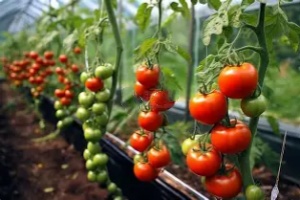
Morphological, transcriptomic and hormonal analyses showed that γ-valerolactone improves the growth of tomato seedlings and increases hormone levels.
Basu A, Prasad P, Das SN, Kalam S, Syed RZ, Reddy MS, El Enshasy H (2021) Plant growth-promoting rhizosphere bacteria (PGPR) as eco-friendly bioinoculators: recent advances, limitations, and prospects. Sustainability 13(3): 1140
Campobenedetto S, Mannino G, Bickwilder J, Contartesse V, Karlova R, Bertea CM (2021) Application of tannin-based biostimulants affects tomato root structure and improves salt tolerance. Sci Rep 11(1):354
Cao Hong, Gong Hong, Song Tao, Yu Ming, Pan Xin, Yu Juan, Qi Zhi, Du Yan, Liu Yan (2022) The adapter protein UvSte50 regulates the pathogenicity of *Ustilago maydis* through the MAPK signaling pathway. *Acta Mycologica Sinica* 8(9):954
Castiglione A.M., Mannino G., Contartesse V., Bertea C.M., Ertani A. (2021) Microbial biostimulants to meet the needs of modern agriculture: composition, functions, and applications of these innovative products. Plants-Basel 10(8):1533
Chandel SS, Sharma KD (2023) Downregulation of carbohydrate metabolism pathway genes under high temperature stress resulted in decreased sucrose and starch contents in chickpea leaves. Proceedings of the Indian Academy of Sciences 46(5):445–449
Chen K, Li GJ, Bressan RA, Song CP, Zhu JQ, Zhao Y (2020a) Dynamics, signaling, and function of abscisic acid in plants. J Integr Plant Biol 62(1):25–54
Chen S, Zhao Y, Zhao H, Chen S (2020b) Identification of putative lignin biosynthetic genes in birch. Wood Structure and Function 34(5):1255–1265
Ding Z, Yao Y, Yao K, Hou H, Zhang Z, Huang Y, Wang S, Liao W (2024) SlSERK3B promotes tomato seedling growth and development by regulating photosynthetic capacity. International Journal of Molecular Sciences 25(2):1336
Geng Peng, Zhang Shuai, Liu Jie, Zhao Chao, Wu Jun, Cao Yong, Fu Chao, Han Xin, He Hui, Zhao Qiang (2020) MYB20, MYB42, MYB43, and MYB85 regulate phenylalanine and lignin biosynthesis during secondary cell wall formation 1 [Open Access]. Acta Physiologica Sinica 182(3):1272–1283
Guo Z, Chen Y, Wu D, Du Y, Wang M, Liu Z, Chu J, Yao S (2022) Transcriptome analysis reveals a key role of exogenous brassinolide in the alkaloid biosynthetic pathway of Pinellia ternata. International Journal of Molecular Sciences 23(18):10898
Gupta K, Wani SH, Razak A, Skalicki M, Samantara K, Gupta S, Pandita D, Goel S, Grewal S, Heynak V, Shiv A, El-Sabrout AM, Elansari HO, Alaklabi A, Brestik M (2022) Abscisic acid: its role in fruit development and ripening. Front Plant Sci 13:817500
Hildebrandt TM, Nesi AN, Araujo VL, Brown HP (2015) Amino acid catabolism in plants. Mol Plant 8(11):1563–1579
Horvath IT, Mehdi H, Fabos V, Boda L, Mika LT (2008) γ-velolactone: a sustainable energy and carbon-containing chemical fluid. Green Chem 10(2):238–242
Khalid F, Rashid Y, Asif K, Ashraf H, Maqsood MF, Shahbaz M, Zulfiqar U, Sardar R, Haider FW (2024) Plant biostimulants: mechanisms and applications for enhancing plant adaptation to abiotic stress. Journal of Soil Science and Plant Nutrition 24:6641–6690

Kishore PBK, Tiozone RN Jr, Fernie AR, Srinivasulu N (2022) Abscisic acid and its role in regulating plant growth, development, and yield stability. Trends in Plant Science 27(12):1283–1295
Kumar K, Raina SK, Sultan SM (2020) Arabidopsis MAPK signaling pathway and its interactions in response to abiotic stress. Journal of Plant Biochemistry and Biotechnology 29(4):700–714
Lee D, Yeon YJ (2020) Synthesis of (R)-γ-valerate from levulinic acid via an enantioselective chemoenzymatic method. Process Biochem 90:113–117
Li F, Wu C, Liao B, Yu K, Ho Y, Meng L, Wang S, Wang B, Du M, Tian X, Li Z (2022) Thiadizoline promotes cotton leaf abscission by regulating complex interactions among ethylene, auxin, and cytokinin. International Journal of Molecular Sciences 23(5):2696
Li J, Min S, Luo Q, Abdoulaye AH, Zhang S, Huang W, Zhang R, Chen Y (2023a) Molecular characterization of the GH3 family in alfalfa under abiotic stress. Gene 851:146982
Li Yan, Han Shuai, Qi Yong (2023b) Research progress on the structure and functions of plant auxin response factors. Journal of Integrative Plant Biology 65(3):617–632
Ma X, Zhang Y, Tureckova V, Xue GP, Ferney AR, Müller-Robert B, Balazadeh S (2018) The NAC transcription factor SlNAP2 regulates tomato leaf senescence and fruit yield. Acta Physiologica Sinica 177(3):1286–1302.
Machik M., Gryta A., Frack M. (2020) Agricultural biofertilizers: concepts, strategies, and impact on soil microorganisms. Progress in Agriculture 162:31–87
Moshinets OV, Babenko LM, Rogalsky SP, Jungin OS, Foster J, Kosakiwska IV, Potters G, Spears AJ (2019) showed the potential to improve plant growth and seed yield by pre-treating winter wheat seeds with the bacterial quorum-sensing signal N-hexanoyl-L-homoserine lactone (C6-HSL). PLoS ONE 14(2):e0209460
Müller M. (2021) Foe and friend indistinguishable: interactions of abscisic acid and ethylene under abiotic stress. Plants-Basel 10(3):448
Moon H-I, Kwon M-K, Lee N-R, Song S-Y, Song D-H, Lee C-H (2021) compared metabolites and functional properties of different tomatoes using mass spectrometry-based metabolomics. Front Nutr 8:659646
Ning Yi, Ding Yongkang, Chang Yonghong, Zhang Shuai, An Haiming, Fu Yongjun (2023) Low concentrations of methyl jasmonate promote growth of Podocarpus macrophyllus through a balance between plant hormone signaling and triterpenoid synthesis. Plant Growth Regulation 101(1):187–199
Pavlovich PV, Koshy P (2022) Differences in gene expression sequence: analysis of RNA-seq data. Methods Mol Biol (Clifton NJ) 2508:279–318
Prisa D, Fresco R, Spagnuolo D (2023) Application of microbial biofertilizers in crop production and resistance enhancement: a review. Agric Basel 13(9):1666
Ren Feng, Liu Ning, Gao Bing, Shen Hui, Li Shuai, Li Li, Zheng Dan, Shen Wei, Gao Ning (2024) Identification of volatile organic compounds in *Stenotrophomonas stearothermiae* for enhancing colonization and promoting growth of tomato seedlings. Journal of Applied Microbiology 135(10):lxae248
Ullah S, Schmidt A, Reichelt M, Tsai SJ, Gershenzon J (2022) No antagonistic interaction exists between salicylic and jasmonic acid signaling pathways in poplar. New Botanist 235(2):701–717
Wang Zhiqiang, Gou Xiaodong (2020) Receptor-like protein kinases are located upstream of MAPKs in the regulation of plant development. International Journal of Molecular Sciences 21(20):7638
Wang Chao, Zhang Jie, Li Jie, Xie Jun, Chai Qiang (2024) Exogenous methyl jasmonate regulates endogenous hormone synthesis in hydroponically grown leeks to promote their growth and photosynthesis. Horticultural Science 327:112861
Young T, Davis PJ, Reid JB (1996) Genetic analysis of the relative roles of auxin and gibberellin in the regulation of pea stem elongation under full light. Acta Physiologica Sinica 110(3):1029–1034
Yu Z, Zhang F, Friml J, Ding Z (2022) Auxin signaling: research progress over the past 30 years. J Integr Plant Biol 64(2):371–392
![YL[[MCDK~R2`T}F]I[3{5~T_副本](https://www.sentonpharm.com/uploads/YLMCDKR2TFI35T_副本.jpg)
Zhang Hua, Zheng Dan, Hu Chao, Cheng Wei, Lei Peng, Xu Hui, Gao Ning (2023) Pseudomonas NRCB010 metabolites induce specific tomato root exudates to enhance rhizosphere colonization. 13(5):664
Zhou Chao, Li Shuai, Zheng Yong, Lei Peng, Chen Yong, Ying Hua, Gao Ning (2022) A high-energy phosphate compound promotes lettuce growth by enhancing photosynthesis, growth, and inducing processes related to systemic stability. Journal of Soil Science and Plant Nutrition 22(2):1955–1969
Zhou X, Shen H, Yan X, Ma X, Leng J, Sun Y, Gao N (2024a) Acetoin promotes plant growth and alleviates salt stress in lettuce seedlings by activating metabolic pathways. Plants-Basel 13(23):3312
Zhou Chao, Zheng Yong, Leng Jun, Ma Chao, Niu Hui, Chen Yong, Ying Hui, Gao Ning (2024b) Effects of exogenous cadaverine phosphate on growth, photosynthesis, and gene expression in lettuce seedlings. Chinese Journal of Soil Science and Plant Nutrition 24(1):537–546
We express our sincere gratitude to the High Performance Computing Center of Nanjing University of Technology for providing us with computing resources.
This research was supported by the National Natural Science Foundation of China (32172673 and 31972503) and the Project of the Student Innovation and Entrepreneurship Training Platform of Nanjing University of Technology (2025DC0047, 2025DC1680, 2025DC1682).
Department of Biotechnology and Pharmaceutical Engineering, Nanjing University of Technology, Nanjing 211816, China
Jiangsu Provincial Key Laboratory of Atmospheric Environment Monitoring and Pollution Control, Collaborative Innovation Center for Atmospheric Environment and Equipment Technology, School of Environmental Science and Engineering, Nanjing University of Information Science and Technology, Nanjing 210044, China
Conceptualization, Shanshan Li; Data curation: Xiyue Sha, Shanshan Li, Hui Shen; Formal analysis, Fangfang Ren and Xin Tao; Funding acquisition: Nan Gao, Weiye Chen, Xiyue Sha, and Zhuorui Li; Methodology, Fangfang Ren and Weiye Chen; Project administration, Nan Gao; Writing – original draft, Fangfang Ren and Hui Shen; Writing, review, and editing: Weishou Shen, Hui Shen, and Nan Gao.
Springer Nature remains neutral with regard to territorial claims and institutional affiliations in published maps.
Springer Nature or its licensors (e.g., associations or other partners) hold exclusive copyright in this article in accordance with publishing agreements with the authors or other copyright holders; self-posting of accepted manuscript versions of this article by authors is entirely subject to the terms of such publishing agreements and applicable law.
Post time: Aug-18-2026
