


With the strengthening of restrictions on highly toxic pesticides, methyl pyrimidinyl phosphine has emerged as an environmentally friendly solution, becoming a new favorite for grain storage. As the country’s restrictions on the use of highly toxic pesticides become increasingly strict, it has become urgent to find green and environmentally friendly solutions for grain storage. Against this backdrop, methyl pyrimidinyl phosphine came into being and became the new favorite for grain storage.
Methyl pyrimidinyl phosphine, as an organophosphorus insecticide and acaricide, stands out for its rapid action, low toxicity, and broad-spectrum characteristics. Methyl pyrimidinyl phosphine is an organophosphorus insecticide with rapid action, low toxicity, and broad-spectrum properties. It has significant efficacy against storage pests such as grain beetles, rhinoceros beetles, moths, and mites, and is widely used in storage, household (public) hygiene, and the control of crop pests. Its formulation products include 500 grams per liter emulsifiable concentrate and 30% microcapsule suspension, providing new options for grain storage.
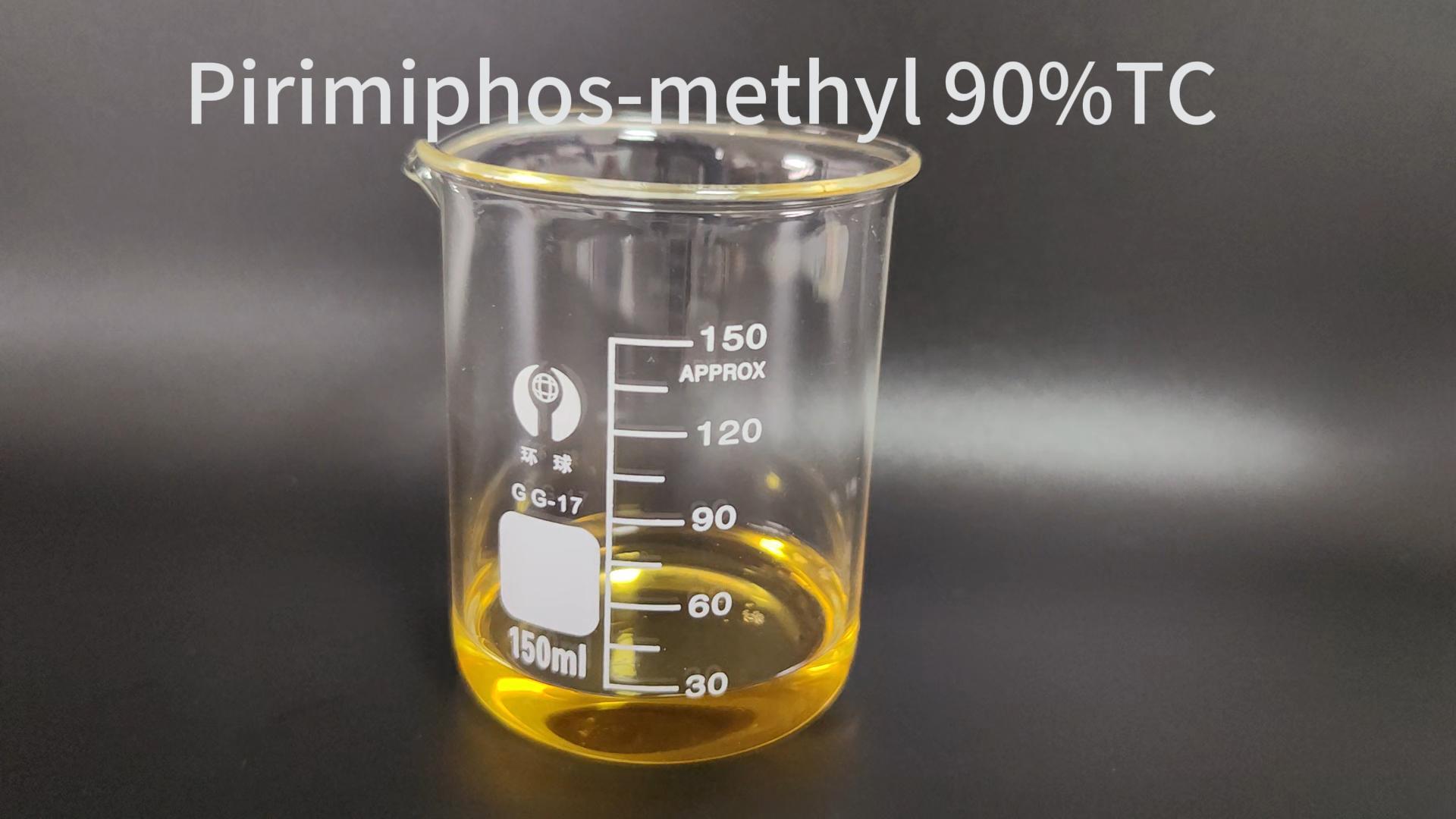
As of now, the total number of registrations for methyl pyrimidinyl phosphorus in China has reached 17, covering various formulations and application methods. The registration overview of methyl pyrimidinyl phosphorus as of now has reached 17, including 4 original drugs, 2 mixed drugs, and 11 single drugs. Among these registrations, both insecticides and sanitary insecticides categories are covered, with diverse formulations. The main targets are mosquitoes and flies as well as stored grain pests. The application methods mainly include residual spraying or mixing with grains.
The properties of Pirimiphos-methyl
◆ 1. Low toxicity
This agent is safe for humans and the environment, and has low toxicity towards non-target animals. When used in markets, kitchens, canteens, etc., follow the product instructions for application to ensure safety and no harm to humans and the environment. At the same time, it shows low toxicity towards mammals and other non-target animals.
◆ 2. Resistance to pests
Effective against pests that are resistant to other pesticides. This product can effectively control a wide range of pests, even those that have developed resistance to other types of pesticides or organophosphorus pesticides.
◆ 3. Vapor Pest Control Effect
The vapor produced by it has a remarkable fumigation pest control property. It can effectively kill pests without direct contact. The fumigation pest control property of methyl pyrimidin phosphide is particularly significant. Even if the pests do not come into direct contact with the application surface, the vapor can still effectively kill the pests.
◆ 4. Duration of Effectiveness and Environment
The duration of effectiveness varies in different environments. It is shorter when applied in space, reducing the risk of residue. When methyl pyrimidin phosphorus is sprayed onto inert objects such as walls and floors, its duration of effectiveness can last for several months, providing continuous fumigation and contact killing effects for various pests. However, when applied in space or water bodies, its half-life is shortened to 3 to 8 days. This ensures effective pest control while rapidly reducing the residual risk of the drug itself, thereby minimizing safety hazards in the warehouse after application.
◆ 5. Non-avoidance property
The non-avoidance property enables its effective accumulation and reaches the lethal dose. Methyl pyrimidin phosphide does not cause the pests to avoid; instead, due to continuous contact, it reaches the lethal dose, thereby achieving efficient control.
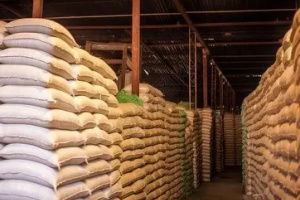
The application of Pirimiphos-methyl in grain storage
◆ Registration Overview and Application
Methyl pyrimidinyl phosphine is widely used in grain storage, supporting agricultural production. Methyl pyrimidinyl phosphine not only has an efficient killing effect on pests, but also has extensive applications in grain storage. When used for grain storage, its application methods mainly include residual spraying or mixing with the grain, aiming to protect the grain from being attacked by pests.
◆ Handling of Grain Storage Locations
Different methods are adopted for preventing pests based on the different materials. Considering the different water absorption properties of the floor and walls of the grain storage area, different treatment methods can be used. For materials with strong water absorption, it is recommended to use 500 grams/liter of methypyradine phosphide 500 to 800 milliliters, mixed with 30 liters of water and sprayed evenly to ensure effective pest prevention within 2 to 3 months.
◆ Pest Control for Grain Storage
Spraying the storage items can effectively prevent pests. For grain storage materials such as sacks, woven bags, the inner walls of barrels, and the contact surfaces between the tarpaulin and the grains, we also need to take pest prevention measures. It is recommended to use 500 grams per liter of methoprene phosphine 500 to 800 milliliters, mixed with 30 liters of water for uniform spraying to effectively prevent pests.
◆ Surface Treatment of Grain
Spray the surface of the grain with a diluent to enhance the pest prevention effect. After the grain pile is completed, to ensure that the surface of the grain is effectively protected against pests, we can mix 500 grams per liter of methyl pyridine phosphorus with water at a ratio of 1:100 for spraying. Mix this diluted solution onto the surface of the grain and ensure that it reaches a depth of at least 30 centimeters. This can extend the duration of the pest prevention effect to a certain extent.
◆ Whole-storage mixing of grains
All grains undergo a whole-storage mixing process to prevent pests for a long time. To achieve the long-term pest prevention effect, we recommend performing this mixing treatment on all grains. Specifically, 500 grams per liter of methoprene phosphine is diluted with water in a 1:100 ratio for spraying. This treatment method has been verified to be highly safe and has a long-lasting effect. Depending on the actual situation, we can flexibly adopt various application methods to ensure the safety of the grains and provide a solid guarantee for the national grain storage.
Post time: Oct-12-2026
