



In table grapes, including the female variety Siah-e-Samarkhandi, bunch morphology and fruit size are critical. However, cultivation of this grape faces several challenges, such as berry drop and dwarf fruit, leading to reduced yield and market value. Berry drop is a major concern for the Siah-e-Samarkhandi variety. Therefore, this study examined the effects of 0, 30, 60, and 90 mg/L⁻¹ GA₃ and 0 and 1.5% HKO₃ on pollination of the Siah-e-Samarkhandi variety under open and controlled pollination conditions. Additionally, another experiment assessed the effects of pollen sources (Siah-e-Shiraz, Askari, Rotabi, Rishbaba, and Aatabaki varieties) on pollination of the Siah-e-Samarkhandi variety. The results showed that, with the exception of the Atabaki variety, pollen from other varieties improved both berry and bunch yield in the Siah-e-Samarkhandi variety. Overall, the combination of 30 mg/L gibberellin (GA₃) and 1.5% potassium nitrate (KNO₃) had the most significant stimulating effect on berry and bunch quality and yield.
This variety is particularly important in Iran and the Fars province due to its freshness and high anthocyanin content. Siah-e-Samarkhandi grapes grow in an arid climate, with average rainfall ranging from 300 to 450 mm in different regions of the province. Because grape cluster appearance and berry size are crucial for freshness, a number of problems exist, such as inconsistent berry size, poor cluster quality, and low berry counts per cluster (due to fruit drop), which reduce yields.³ Edible grape seed extract can exert a variety of biological effects, including acting as natural antioxidants, preservatives, and food sterilizers, thereby preventing food contamination by harmful microorganisms.
![A]VC]V`ZEQYA$$}14E0SF_1](https://www.sentonpharm.com/uploads/AVCVZEQYA14E0SF_11.png)
Regarding grape variety compatibility, most varieties are self-compatible and self-pollinate. Fertilization in closed flora is common in grapes. Although there are exceptions, they are rare; some varieties are self-incompatible. Fruit yield and quality are influenced by many factors. One of the fundamental factors is the reproductive biology of the grape variety. Full development of floral organs and the production of suitable pollen with high germination rates are essential for ensuring fertility. Pollen germination depends on the variety, nutritional conditions, and environmental factors, and optimal conditions for pollen germination vary .
The use of gibberellin in fresh seedless grapes can increase berry size during fruit set. 8.
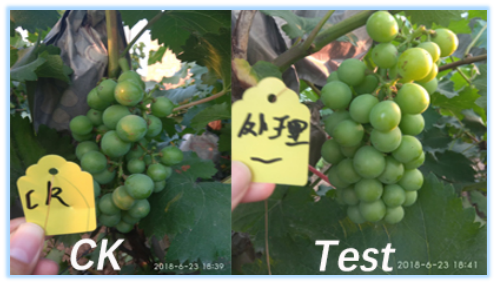
Given the high level of grape cultivation, finding suitable solutions to improve its quality is crucial. Pollen treatments were conducted on varieties such as Siah-e-Shiraz and others, as these treatments resulted in pollen grains with high germination rates (data not provided). Placing these pollen grains (healthy pollen grains are a rich source of auxin and GA3) on the style of the Siah-e-Samarkhandi variety and their germination stimulates ovary growth, leading to the synthesis of greater quantities of these hormones and, ultimately, fruit formation. The presence of healthy pollen grains in the fruit leads to the formation of healthy seeds (Figures 1A-F). The main objective of this experiment was to investigate the causes of grape fruit cracking and the effectiveness of treatments such as gibberellin (GA3) and potassium nitrate (KNO3) interaction and cross-pollination in preventing or mitigating this problem in Siah-e-Samarkhandi grape variety.
This experiment was conducted over two years (2021-2022) at a commercial rainfed vineyard in the village of Khoral, northwest of Shiraz, Iran (35 km northwest of Shiraz, 29°57′ N, 52°14′ S). The region has a mild, cool climate with an average annual rainfall of 450 mm and clay-loam soil. Grapevines were planted 3.5 meters apart in rows and 4 meters between individual vines. The vineyard was not irrigated (rainfed agriculture). Collection of plant material complied with relevant institutional, national, and international guidelines and regulations and was authorized by a commercial horticultural enterprise in collaboration with Shiraz University.
The first and second experiments used a factorial design based on a randomized block design and were repeated four times.
The third experiment involved cross-pollination (controlled pollination) of the Siah-e-Samarghandi cultivar using pollen from five cultivars (Rotabi, Rishbaba, Askari, Atabaki, and Siah-e-Shiraz). Pollen from the Siah-e-Samarghandi cultivar was used for self-pollination of this cultivar and served as a control in this experiment.
During the flowering period of each Siah-e-Samarghandi grape variety, pollen from these varieties was applied to four selected inflorescences. One to three days before flowering, the selected inflorescences were placed in paper bags. Twenty-five percent of the blossoms of the pollinating variety were placed in the bags. Ten to fourteen days after flowering, all paper bags were removed from the inflorescences.
After fruit ripening (soluble solids content ≥16%), grape yield was measured individually. Eight bunches (four bagged, the rest unbagged) were then randomly selected from four sides of the vine and transferred to the physiological laboratory of the Department of Horticulture, Faculty of Agriculture, Shiraz University, Iran, for quantitative and qualitative characterization.
The fruit set rate is calculated using the following formula by counting the number of flowers 10 days before flowering and the number of berries formed 10 days after flowering.
In the first two experiments, 10 berries were randomly selected from each bunch; in the third experiment, 50 berries were selected. The number of seeds in each berry was counted, and the average number of seeds per berry in each treatment group was calculated.
To determine phenolic compounds, fruit juice extract was diluted 1:1 with 80% methanol. Then, 100 μl of the ethanol extract was mixed with 400 μl of phosphate buffer and 2.5 ml of Folin-Ciocalteu reagent (Sigma-Aldrich). After 1 minute, 2 ml of 7.5% sodium carbonate solution was added to the mixture, and the sample was incubated at 25°C for 5 minutes. Absorbance was then measured at 760 nm using a spectrophotometer (BioTek Instruments, Inc., USA). The results are expressed as milligrams of gallic acid per 100 g of fresh weight, with gallic acid used as a standard.
Anthocyanin content was determined by the differential pH method using two different buffers: 25 mM KCl buffer at pH 1.0 and 0.4 M sodium acetate buffer at pH 4.5. Each sample was incubated in both buffers for 15 min, and absorbance was measured at 510 nm and 700 nm, with five replicates for each sample. Total anthocyanin content was determined according to the method of Sabir et al. .
Antioxidant activity was determined using the 1,1-diphenyl-2-trinitrophenylhydrazine (DPPH) method. The specific method was as follows: 100 ml of fruit juice was diluted with methanol and water at a ratio of 1:100. The extract was then mixed with 2 ml of a 0.1 mM DPPH solution in methanol. After 30 minutes, the absorbance of the resulting solution was measured at 517 nm using a Cecil 2010 UV spectrophotometer. The free radical absorbance of DPPH without extract was used as a control. Antioxidant activity was calculated using the following formula:
This experiment used a completely randomized design, repeated three times (each repetition contained four clusters). Data were analyzed using SAS 9.1 software, and Tukey’s test was used to compare means at a significance level of 0.05. Cluster heatmaps were generated using R software for multivariate analysis.
Compared with the self-pollination treatment (14.97%), the TSS value for cross-pollination in the Atabaqui treatment was 16.93%, which is a significant difference. No significant differences were observed between the other treatments and the self-pollination treatment (Figure 4B).
The highest antioxidant activity was observed with self-pollination (55.78%), while the lowest was observed with atabaca pollen (18.88%) and askari (31.54%). Other treatments did not differ significantly from the control group.
Post time: Apr-08-2026