



Research has shown that because mosquito bites occur more frequently during the day, soaking fabrics with common insect repellents is a simple and effective method.
From Africa to Latin America, and then to Asia, for centuries mothers have wrapped their babies in cloth and carried them on their backs. Today, this tradition, passed down from generation to generation, can become a lifesaving cure for malaria.
Researchers in Uganda have found that treating parcels with the insecticide permethrin can reduce malaria rates among infants inside the parcels by two-thirds.
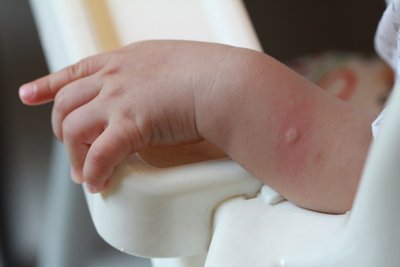
Malaria kills more than 600,000 people each year, most of them children under five in Africa.
An experiment conducted in the rural village of Kasese in western Uganda involved 400 mothers and their infants, aged around six months. Half of the infants used permethrin-treated diapers, known locally as “lesus,” while the other half used untreated regular diapers, simply soaked in water, as a “mock” mosquito repellent.
The researchers followed them for six months to see which infants developed malaria and re-treated the diapers monthly.
Infants swaddled in treated diapers were two-thirds less likely to contract malaria. In this group of infants, the incidence of malaria was 0.73 per 100 infants per week, compared to 2.14 per 100 infants per week in the other group.
One mother, present at a community meeting to discuss the results of the experiment, stood up and told everyone, “I have five children. This is the first time I’ve carried a child in a treated diaper, and it’s also the first time I’ve given birth to a child who has never had malaria.”
Edgar Mugma Mulogo, a professor of public health and lead researcher at Mbalala University of Science and Technology in Uganda, said the findings were “very exciting” for everyone.
”We expected potential benefits, but we were really surprised by how big those benefits turned out to be.”
His co-lead author, Dr. Ross Boyce of the University of North Carolina at Chapel Hill, was shocked and said the experiment should be repeated to further confirm the results. “Frankly, I wasn’t sure at first that this result would be successful,” Boyce said, “but that’s why we do research.”
Mosquitoes that carry malaria parasites typically feed at night, so mosquito nets have historically played a critical role in the prevention and control of malaria.
However, they are increasingly biting people during off-peak hours, such as in the evening or early morning, which may be an adaptation to mosquito nets.
Mulogo said: “Before bedtime, when you are outdoors – especially in rural areas where kitchens are outdoors and people may dine outside – we also need to find a solution to prevent bites that can spread malaria.”
He said the diapers are ubiquitous in these communities and are used not only for carrying babies but also as shawls, sheets, and aprons. He hopes that the treated diapers could become a tool in Uganda’s fight against malaria. He noted that such a need has already emerged in the communities participating in the study.
Ugandan health officials and the head of the World Health Organization’s international malaria program expressed concern about the study. The study could be beneficial for infants, as the protective effect of maternal antibodies gradually fades, often even before the child is vaccinated.
This study also builds on previous studies on treating shawls in Afghan refugee camps, which demonstrated similar success. World Health Organization guidelines already recognize the protective effect of permethrin-treated clothing in preventing malaria.
Mulogo hopes to launch local production of impregnated food film in the future. “This would be a great opportunity for local business development.”
The researchers say a number of steps are needed before widespread adoption, including providing evidence of the method’s effectiveness in other settings.
Boyce stated that the pesticide has a good safety profile and has been used in the textile industry for many years, including by the US military. He first encountered the pesticide while serving in Iraq.
Infants swaddled with permethrin-treated diapers had a slightly higher risk of developing a rash—8.5% and 6%, respectively—but all cases were mild and did not require exclusion from the study. Boyce and Mulogo stated that further research is needed to confirm the safety of this method, but its benefits likely outweigh any risks.
Boyce hopes to study whether treating school uniforms could also reduce malaria incidence. However, he stated that he currently lacks the funds for the next phase of research.
He hopes the simplicity of this method will attract sponsors. “Even my mother understands what we’re doing. It’s not about any specific fusion protein inhibitor or anything like that. We just took the tissue, soaked it, and it’s very inexpensive,” he said.
Post time: Jan-20-2026