


Pest and disease control has always been a major challenge in agricultural production. How to effectively prevent and control pests and diseases and reduce economic losses has become a common concern for farmers. In this regard, it is particularly important to understand the characteristics of various pesticides, the precautions for use, and the application methods.
Properties and Classification of Diflubenzuron
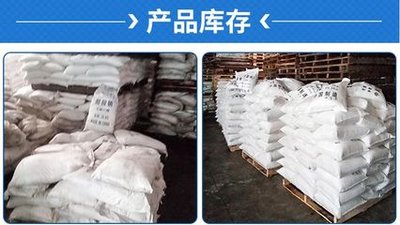
Diflubenzuron, as a benzoyl-based insecticide, has both contact and stomachicidal effects, and is non-systemic. It is currently the most effective acyloxy-based insecticide for mite control. It not only has excellent insecticidal effects but is also an ideal insecticide and acaricide. Its commercial names include Fipronil, Kaldic, and Deltamethrin, etc., and it has low toxicity. It comes in various common formulations. 5% emulsifiable concentrate, 5% and 25% wettable powder, as well as 20% suspension agent, are all different formulations of Diflubenzuron. Diflubenzuron and Fenpropathrin belong to the same type of insecticides and are often collectively referred to as Fenpropathrin.
The efficacy and mechanism of Diflubenzuron
Mite-killing effect and mechanism of action
As a benzoyl-based insecticide, it is an insect growth regulator. It has both contact and stomachicidal effects on pests and mites, but lacks systemic activity. This agent does not directly kill adult mites, but can effectively shorten their lifespan, reduce the number of eggs produced, and even prevent eggs from hatching. Moreover, the hatched young mites will also die rapidly, which makes it have excellent mite-killing effect among carbamate insecticides. Its insecticidal mechanism lies in inhibiting the synthesis of chitin in insects, preventing the larvae from forming a new exoskeleton during molting, and ultimately causing them to die due to abnormal development.
Target pests
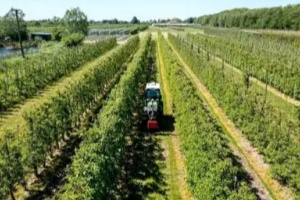
It has a highly effective effect on lepidopteran pests and also shows good control results on various other pests such as scarabaeid, brachyceran, and dipteran pests. It has no significant adverse effects on beneficial organisms and natural enemies. It is mainly applied to crops like apples, pears, citrus, corn, rice, cruciferous vegetables, etc., for the control of pests such as apple webbing moth, sugar beet night moth, pear fruitworm, pear aphid, corn borer, wheat borer, citrus aphid, cabbage moth, etc.
Usage instructions
Scale bug: For controlling citrus scale bug, spray with 60-80mg/kg from the egg hatching stage to the nymph stage.
Tea moth: For controlling tea moth, spray with 100-200mg/kg from the egg hatching stage to before the 3rd instar.
Leafroller: For controlling citrus leafroller, spray with 60-125mg/kg.
Stink bug: Active ingredient 15-30g/hm², spray in water at the 3rd-4th instar of the first generation, at the egg hatching peak of the 2nd generation, and at the 2nd-# instar of the 3rd generation.
Corn borer: At the initial egg hatching or peak egg-laying period, use 100-200mg/L for injection or spraying.
Rice stem borer: Before the 1st-3rd instar of the larvae, spray with 25mg/L.
Cabbage moth, small cabbage moth: At the initial stage of larva occurrence, spray with 150-225g/hm² or 25mg/L solution.
Sugar beet night moth, striped night moth: At the initial stage of egg hatching, spray with 100mg/kg solution.
Bollworm: At the peak of egg-laying, spray with 3-4mg/L solution.
Citrus aphid: Spray with 100mg/L solution during the nymph stage.
Sawfly, tent caterpillar, poplar moth: At the low instar of larvae, spray with 30-45g/hm² solution on water. This pesticide has an egg-killing effect on these pests.
Mosquito larvae: Spray with 25-40g/hm² water surface area.
Cable larvae: Spray with 0.5-1g/hm² surface area.
This pesticide is effective against termites, ants, cockroaches, and storage pests.
Drug efficacy and application suggestions
After 2-3 days, pests and mites will gradually stop feeding. And by 3-5 days, the drug efficacy will reach its peak. However, to see a significant effect, it usually takes about 10 days. This insecticide has a remarkable effect on lepidopteran pests, and also shows certain efficacy against some hemipteran and dipteran pests. Particularly worth mentioning is that for the golden-striped moth on fruit trees, it can be sprayed during the larval hatching period to achieve the best control effect.
5% Diflubenzuron emulsifiable concentrate should be diluted with 1000-2000 times before use to effectively control rust mites. If using 25% Diflubenzuron wettable powder, it is recommended to spray at a concentration of 3000-4000 times evenly. Please note that during use, avoid mixing with alkaline pesticides, and since this pesticide has no systemic action, ensure uniform spraying to fully exert its efficacy. Additionally, due to the slow drug efficacy, it is recommended to start spraying during the early larval stage to ensure the best control effect.
Post time: Oct-12-2026
