



Wallabies were introduced from Australia in the late 19th century for hunting, private zoos and the value of their fur.
With no natural predators, they have adapted to New Zealand’s conditions, and the current wild population is estimated to exceed one million individuals.
They may be cute and adorable, but they pose a serious threat to New Zealand’s biodiversity and economy.
”Kangaroos eat everything they can get their hands on in our native forests, including the seedlings that will become future forests,” said Zane Jensen, operations manager for the Rotorua Department of Conservation, New Zealand.
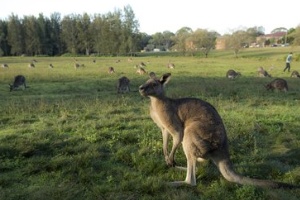
Kangaroos can damage reforestation and productive agricultural land, causing huge economic losses.
”Kangaroos have caused New Zealand millions of dollars in agricultural losses and environmental damage,” Jason said.
The Ministry of Environment is collaborating with numerous agencies and the National Kangaroo Eradication Program in Tipumatoro to reduce the spread of these animals, with the ultimate goal of eradicating them. The government is investing $1 million over two years to support these efforts.
Jensen said the Department of Environment is also working with the Bay of Plenty Maori to “limit the existing numbers of small kangaroos” and prevent their further spread.
”This has improved the skills and capabilities of local Maori tribes, allowing them to also practice kangaroo control on their own land.”
The Bay of Plenty Regional Council is responsible for pest control in the area and is involved in an eradication programme.
In June, the regional committee revised its regional pest management plan, adding all known wallaby species in the region to the list of species to be eradicated or phased out.
Eradication involves the complete destruction of pests with the goal of removing them entirely from the treated area. Progressive control, on the other hand, aims to prevent the spread of pests beyond the controlled area.
The North Island Central Wallaby Sanctuary uses natural features such as rivers, steep canyons and lakes as barriers, and also has surrounding buffer zones for conservation work.
The wallaby population in the quarantine zone is being destroyed gradually, starting from the periphery, in the hope of eradicating it completely.
But it’s not that simple. The North Island’s central buffer zone covers approximately 260,000 hectares—roughly the size of Luxembourg.
The North Island Central Wallaby Sanctuary, including the yellow buffer zone, covers approximately 260,000 hectares. (Image credit: BOPRC)
The work continues: in 2024-2025, the regional council destroyed 15 small kangaroos, and another 1,988 individuals are under control, meaning their spread beyond the controlled zone has been prevented.
”The current focus is on finding and eliminating all wallaby populations outside their core range,” said Davor Bejakovic, wallaby project manager for the Bay of Plenty Regional Council.
The contractor used kangaroo hunting dogs and camera traps to locate and define the range of the kangaroo population.
”If a small population of kangaroos remains outside the quarantine zone, the city council will work with landowners to develop and implement a plan to control the numbers of these animals,” Bejakovic said.
”In these areas, the number of wallabies killed is not important; what matters is determining whether any wallabies survive, because our job is to find and kill the last wallabies in the area.”
”Kangaroo control operations are carried out at strategic locations within the containment zone using night shooting.”
The regional council is responsible for trapping and eradicating pests such as kangaroos and goats, and landowners are responsible for controlling the numbers of these species.
During the year ending June 30, the Regional Committee received 147 complaints from the public regarding other animal pests. These pests, such as rabbits, weasels, and possums, are considered a threat due to their persistent presence in the area. The Regional Committee was unable to provide precise data on which pests accounted for the majority of complaints.
The district council may make recommendations for management, but responsibility lies with the landowner or tenant.
This year, the problem of nearly 1,000 feral goats was also addressed, with eight of them exterminated and 960 brought under control. This year marks the 20th anniversary of the feral goat control program in the East Bay of Plenty.
Over the past two decades, approximately 35,000 goats have been raised in captivity at a cost of $10 million, and these goats have been crammed into an area equivalent to more than a million football fields.
Matthew Nash is a local correspondent for the Rotorua Daily Mail, specializing in democracy issues. He has also written for SunLive, regularly contributes to RNZ, and spent eight years as a football journalist in the UK.
Post time: Dec-30-2025